Hurricane and storm water damage cleanup in Orlando, FL
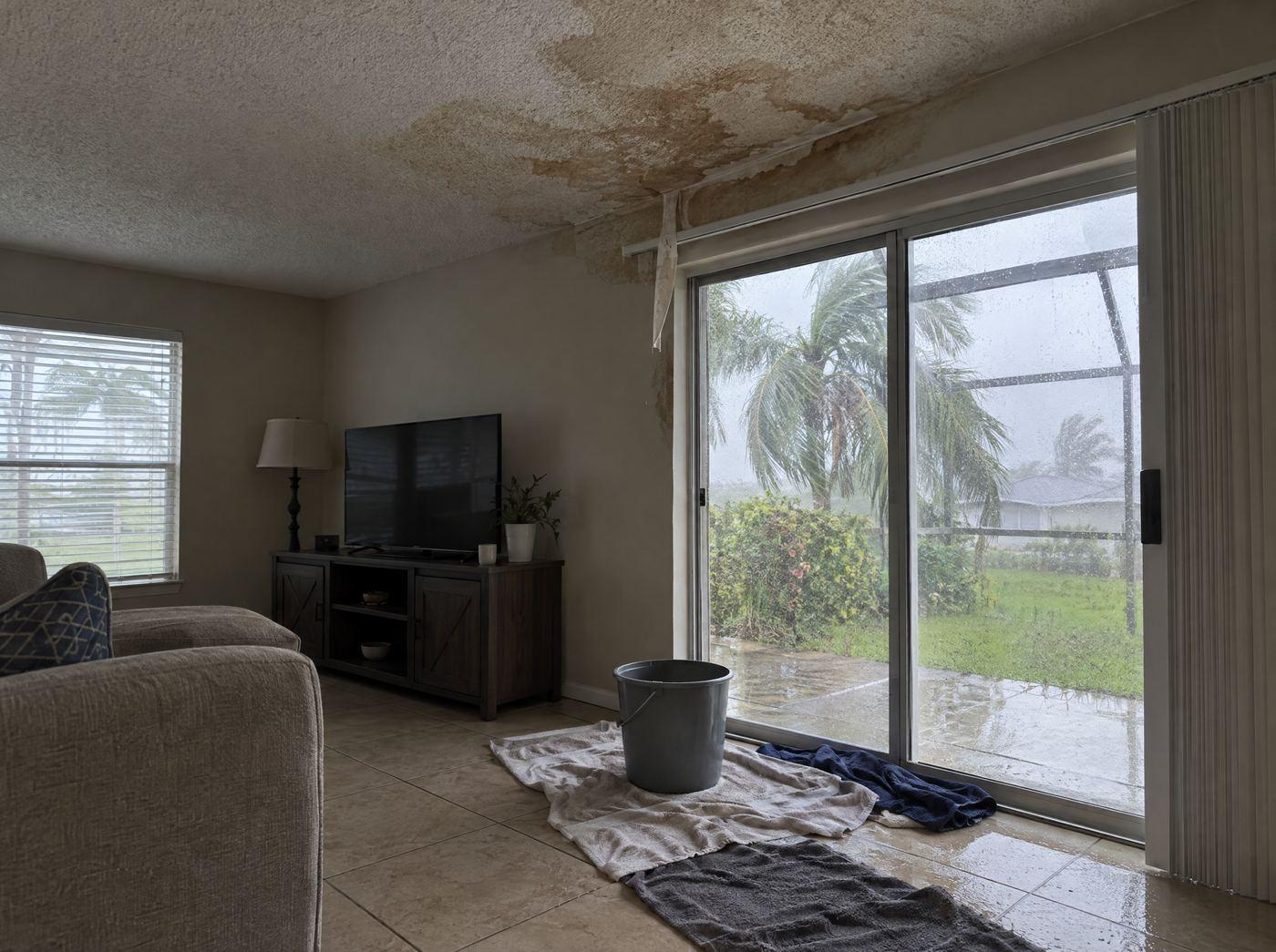
In Orlando, storm water usually gets in from above or from the side. A hurricane or a hard summer thunderstorm lifts shingles, pulls flashing, cracks a window or pushes rain past a sliding door. The water soaks attic insulation, spreads across the top of the ceiling drywall, and shows up as a stain or a sag a day later.
Ceilings are the urgent part. Wet drywall overhead gets heavy, and insulation above it holds water against the board. Once the opening is covered, getting the ceiling and attic dried or opened up within a day or two keeps a leak from turning into a mold problem in the summer heat. The roof or window repair itself is a separate job for a licensed roofer or contractor.
Water category:Category 1 or 2 for rain that came through the roof or windows
1If a ceiling is bulging, keep people out from under it. Do not poke it unless you know what you are doing and the power to that room is off.
2Put buckets and towels down and move furniture and electronics out of the drip line.
3Photograph the ceiling, the walls and the outside damage before anything is cleaned up.
4Get the opening covered with a tarp or board by someone who can do it safely. Do not climb on a wet roof.
5Write down the date of the storm. Your policy and Florida's claim deadlines run from the date of loss.
How hurricane & storm water damage cleanup usually works in Orlando
Step 1
Check for hazards
The crew looks for sagging ceilings and wet electrical fixtures before work starts, and notes where the water came in.
Step 2
Attic and ceiling inspection
Wet insulation and the top of the ceiling drywall are checked with meters and a thermal camera. Soaked insulation usually comes out.
Step 3
Open what cannot dry
Sections of ceiling that are sagging or soaked through are cut out so the space above can dry.
Step 4
Drying
Dehumidifiers and air movers run in the rooms and, when needed, the attic. Florida humidity means dehumidification does most of the work.
Step 5
Records
Photos and moisture readings tie the interior damage to the date of the storm. Keep copies for your own files.
Local notes
What Orlando homeowners should know
After Hurricane Ian in 2022, Orange County counted 10,591 housing units with losses. Write down the storm date and photograph every room. Florida gives you one year from the date of loss to report a new claim, so do not wait for the next storm to deal with an old stain.
Insurance
Will insurance cover it?
Florida policies handle storm water two ways. Rain that enters because wind first damaged the roof, a window or a wall is often covered, while rain that seeps in through an old roof without storm damage often is not. If the damage came from a hurricane, a separate hurricane deductible usually applies. Florida law requires insurers to offer hurricane deductible options of $500, 2%, 5% or 10% of the dwelling limit, and it applies once per calendar year. Rising water from outside is flood, which needs a flood policy. Check your declarations page for your own deductible and coverage.
No honest company can price this over the phone. These are the things the crew measures on site. Read the full cost guide.
How much ceiling drywall and attic insulation got wet
How many rooms the water reached
How long it rained in before the opening was covered
Whether walls, flooring or cabinets were also soaked
Number of drying days
Talk to a local restoration company
One call connects you with an independent company that serves your part of Orlando. Ask for its Florida license number, get a written estimate, and you decide whether to go ahead.
My ceiling has a stain after the storm but feels dry. Do I need anyone?
A stain means water got into the drywall and probably the insulation above it. The surface can feel dry while the insulation is still wet. A moisture meter or thermal camera can tell you in a few minutes whether there is water hiding up there.
How does a hurricane deductible work in Florida?
It is separate from your regular deductible and applies to hurricane losses. Florida law requires insurers to offer options of $500 or 2%, 5% or 10% of your dwelling coverage, and the hurricane deductible applies once per calendar year across hurricanes. Your declarations page shows which one you have.
Should a restoration company fix my roof?
No. Roof work in Florida is done by licensed roofing contractors. A restoration company dries and cleans the inside. You can check any contractor's license on the Florida DBPR license search.