Water Damage Restoration Cost in Orlando, FL: What Sets the Price
By Central Florida Dry Call · Reviewed
Short answer
No two jobs cost the same. Nationally, Angi reports an average of about $3,800, with most homeowners paying about $1,400 to $6,300. Your price comes from the water category, how many square feet got wet, how long it sat, and how much has to be removed and rebuilt. Those figures are national averages, not a quote or an Orlando price.
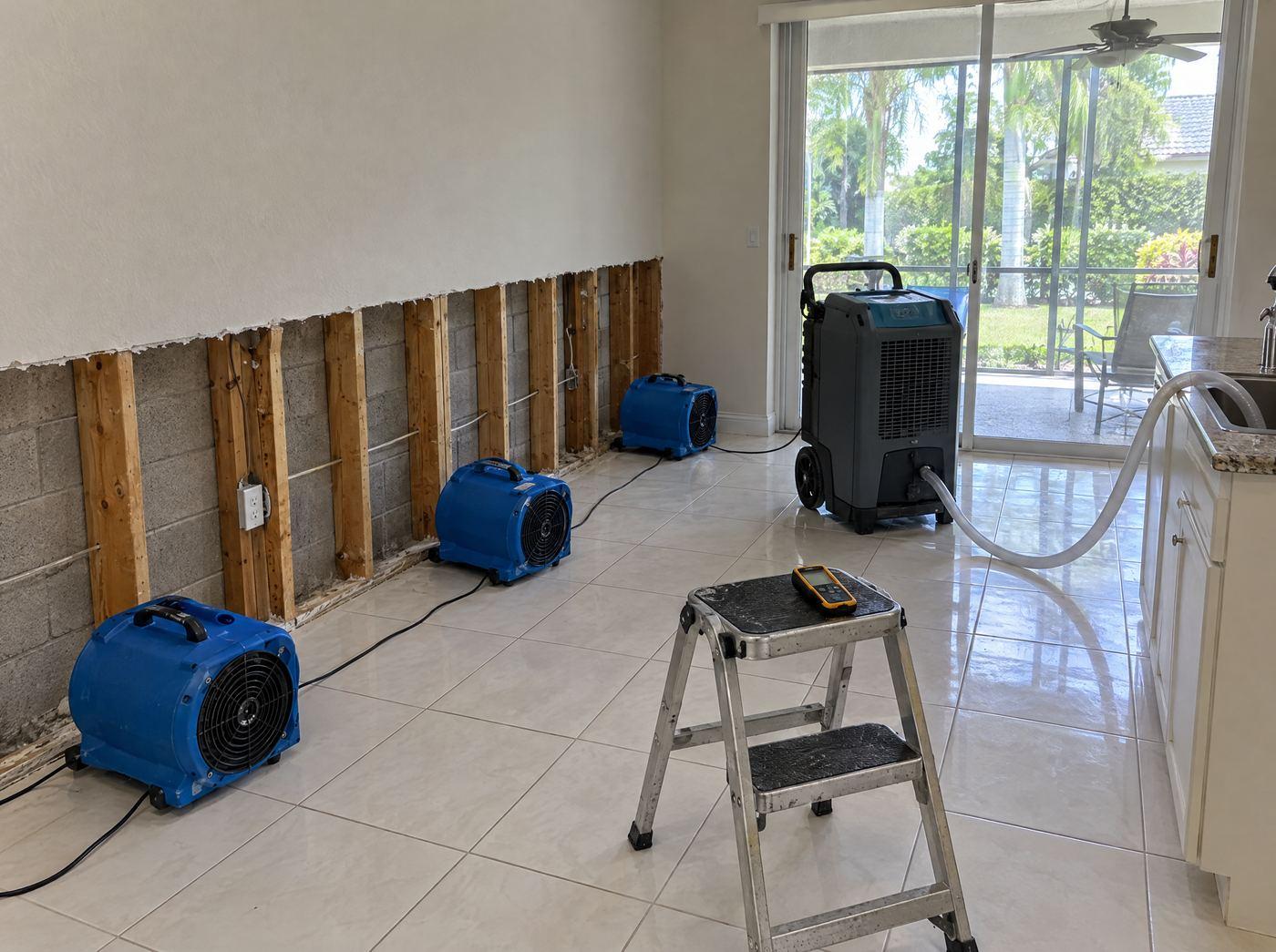
Search for water damage restoration prices in Orlando and you'll find big ranges and very few straight answers. That's because the cost is built line by line from measurements taken in your home. Here is what goes into that number, so you can read an estimate with confidence and spot a padded one.
National average cost of water damage restoration
According to Angi, water damage restoration in the US averages about $3,800. Most homeowners pay about $1,400 to $6,300, or roughly $3 to $7.50 per square foot, depending on the water category. These are national figures, not a quote or an Orlando price. A small clean-water leak can land well under the average, and a sewage backup or flood water through several rooms can land well above it. The number that counts for your home is a written estimate after a crew measures the moisture.
The six things that set the price
1. Water category
The IICRC S500 standard sorts water into three categories. Clean water from a supply line (Category 1) usually costs less to handle because most materials can be dried in place. Gray water from a washer or dishwasher drain (Category 2) needs cleaning and antimicrobial treatment. Sewage (Category 3) means containment, removal of porous materials like carpet and drywall, and disinfection. See sewage backup cleanup for what that involves.
2. Wet area and evaporation class
More square feet means more extraction and more drying equipment. The class of the loss (how much water the materials soaked up) decides how many dehumidifiers and air movers a room needs. Try the water damage estimator to see typical equipment counts for your size and type of damage.
3. How long the water sat
Time multiplies the cost. Clean water left for two or three days starts to behave like gray water, drywall wicks it upward, and subfloors swell. Calling the same day often keeps a job from moving into a more expensive category.
4. Materials that got wet
Carpet over concrete dries quickly. Wood and laminate floors, cabinets and the concrete slab itself take specialty equipment and more days. In Orlando, where most homes sit on a slab, water trapped under tile or laminate is a common reason a job runs longer.
5. Tear-out and rebuild
Restoration usually has two phases with two bills: mitigation (extraction, drying, removal of what can't be saved) and reconstruction (new drywall, paint, flooring, trim). Ask whether an estimate covers one or both.
6. Drying days and monitoring
Equipment is billed per day, and crews take moisture readings daily until every material reaches its dry standard. Most jobs take three to five days. Those daily logs are also what justify the bill to your adjuster.
What insurance usually pays
A sudden loss like a slab leak or an AC or appliance failure is often covered by a standard HO-3 homeowners policy, minus your deductible. Hurricane damage usually carries a separate hurricane deductible, sewer backups often need added water backup coverage, and rising water from outside needs a separate flood policy. Our Florida water damage insurance guide covers each case.
- You usually pay: your deductible, the repair of the failed pipe or appliance, and anything your policy excludes.
- Insurance often pays: extraction, drying, necessary tear-out, and repairs of resulting damage for covered losses, under your policy terms.
- Billing: your contract is with the restoration company. On Florida policies issued since January 1, 2023, you cannot assign your claim benefits to a contractor.
How to keep the cost down
- Shut off the main water valve the moment you find the leak.
- Photograph every wet room from all four corners before anything is moved.
- Get extraction started the same day. Every day of standing water adds cost.
- Don't use household fans or a shop vac on gray water or sewage.
- Ask for a written, itemized estimate and daily moisture readings.
Red flags in a water damage estimate
- A firm price quoted over the phone before anyone has measured moisture.
- No moisture readings, photos, or drying logs.
- Pressure to sign paperwork before you've read it or talked to your insurer.
- No Florida license number you can look up, or no proof of insurance.
- Offers of gifts, cash or a waived deductible to get you to file a claim.
Check any company's license on the Florida DBPR license search before you sign. Read how calls are connected and how we are paid.
Common questions
What is the national average cost of water damage restoration?
Angi puts the US average at about $3,800, with most homeowners paying about $1,400 to $6,300, or roughly $3 to $7.50 per square foot. That is a national figure, not a quote or a Orlando price. Your cost depends on what the crew measures on site.
Why won't a restoration company give me a price over the phone?
Because the price depends on things nobody can see from a phone call: how far the water traveled inside walls and under floors, which materials are wet, and how long they have been wet. An honest company measures moisture on site first, then writes an itemized estimate.
Do I pay the restoration company or does my insurance?
Your contract is with the company, so you are responsible for its bill. If the loss is covered, your insurer pays you, or you and the company jointly, under your policy, minus your deductible. On Florida policies issued since January 1, 2023, you cannot assign your claim benefits to a contractor. Many companies write estimates in Xactimate, the software most adjusters use, which makes the numbers easier to compare.
Does it cost less to dry out water damage myself?
For a small spill of clean water caught right away, maybe. Once water reaches carpet pad, drywall, or subfloor, household fans and a shop vac usually leave moisture behind, and mold or swollen materials can turn a covered drying job into a bigger repair. Drying that isn't documented can also weaken an insurance claim.
How long does professional drying take?
Most residential jobs reach dry standard in three to five days with commercial dehumidifiers and air movers. Hardwood, plaster, and concrete can take longer. Each extra day of equipment adds to the bill, which is why fast extraction matters.