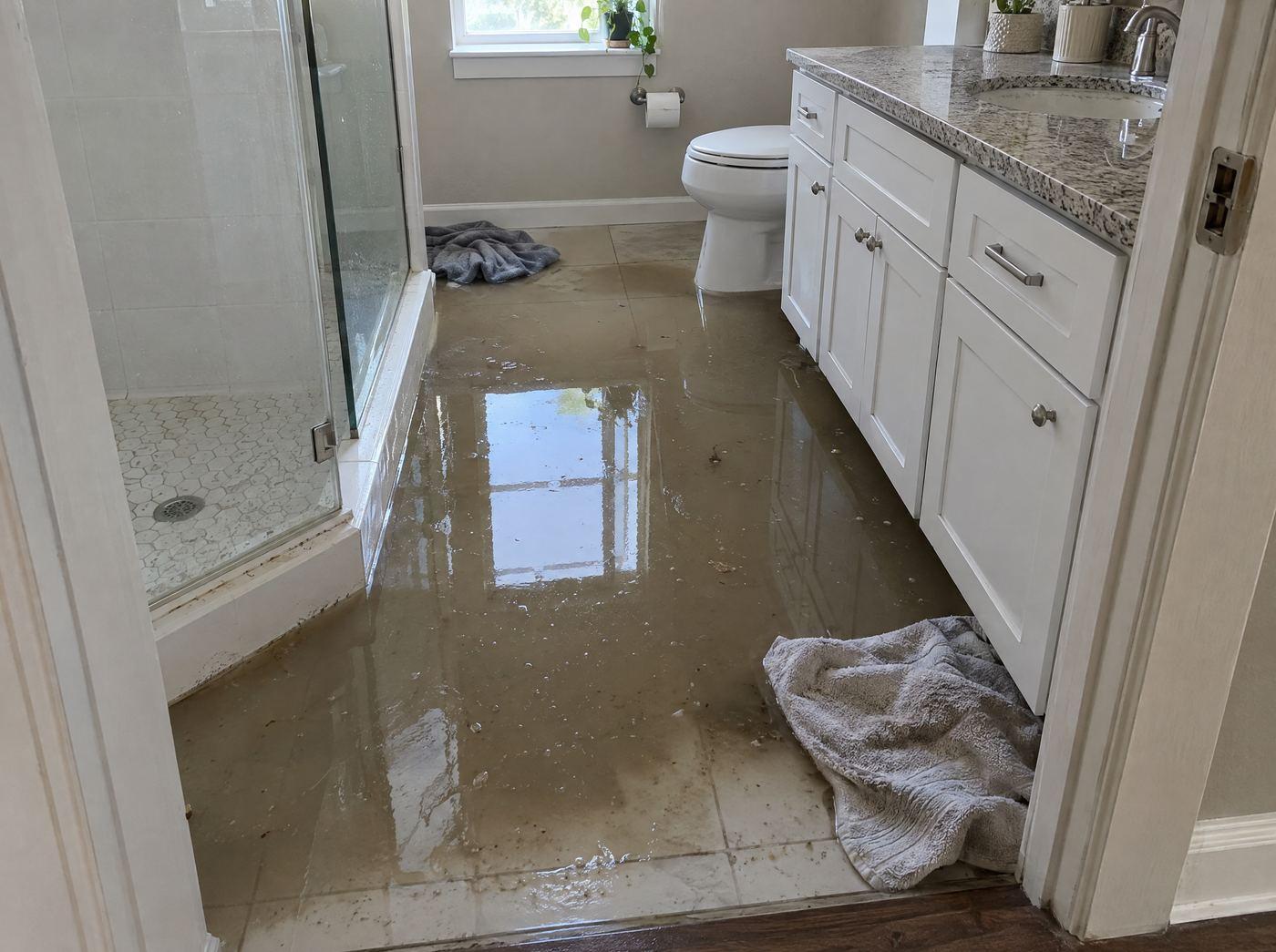
Sewage is Category 3 water under the IICRC S500 standard: it carries bacteria and other contaminants that can make people sick. On a slab home it usually shows up at the ground-floor drains first, a shower, a tub or a toilet on the ground floor. The cause is a clog or roots in your own sewer line, or a problem in the public main.
Cleanup is not a mop-and-bleach job. Porous materials sewage touched, such as carpet, pad and the bottom of drywall, generally have to be removed and bagged. The area is contained so contamination does not spread, then cleaned, disinfected and dried.
Water category:Category 3 (black water)
1Keep children and pets out, and stop using every sink, tub, toilet and the washer until the line is cleared.
2Do not run fans or the AC blower in the affected area. They can spread contaminated air.
3Do not use a household vacuum or shop vac on sewage.
4Photograph the water and the drain it came from.
5If you are on City of Orlando sewer and suspect the public line, report it to the city's Water Reclamation number.
How sewage backups cleanup usually works in Orlando
Step 1
Containment
Plastic barriers and air filtration keep contamination in the affected area.
Step 2
Removal
Contaminated porous materials are removed and bagged. Hard surfaces are kept where they can be cleaned.
Step 3
Cleaning and disinfection
Floors, framing and remaining surfaces are cleaned and treated with an EPA-registered disinfectant.
Step 4
Drying
Dehumidifiers and air movers dry the structure once it is clean, with HEPA air scrubbing as needed.
Step 5
Records
The source, the affected area and the readings are written down. Ask for copies.
Local notes
What Orlando homeowners should know
City of Orlando sewer customers can report backups and overflows to Water Reclamation at 407-246-2213. If your sewer bill comes from another utility, use the number on that bill. Do not use any drains until the line is cleared.
Insurance
Will insurance cover it?
Sewer and drain backups are often excluded from a base homeowners policy unless you added water backup coverage, which usually has its own limit. Policies differ, so check your declarations page or ask your agent before you assume either way. If a public sewer main caused it, the utility may have its own claim process.
No honest company can price this over the phone. These are the things the crew measures on site. Read the full cost guide.
How far the sewage spread and how long it sat
Flooring and how much drywall it touched
Amount of contaminated material that must be removed
Containment and air scrubbing required
Drying time after cleaning
Talk to a local restoration company
One call connects you with an independent company that serves your part of Orlando. Ask for its Florida license number, get a written estimate, and you decide whether to go ahead.
Who do I call if the Orlando city sewer backed up into my house?
If you are on City of Orlando sewer, report it to the city's Water Reclamation Division at 407-246-2213 and note the time. If you are outside city limits, use the number on your sewer bill. A plumber can tell you whether the clog is in your line or the public main.
Is it safe to stay home after a sewage backup?
Often, if the backup is confined to one area, you keep people and pets away from it, and you do not use the plumbing until it is cleared. Anyone with a weak immune system, young children and pregnant people should stay away from the area entirely.
Can carpet be cleaned after sewage gets on it?
Under the IICRC S500 standard, carpet and pad soaked by Category 3 water are generally removed and replaced, not cleaned.