Slab leak and burst pipe water damage in Orlando, FL
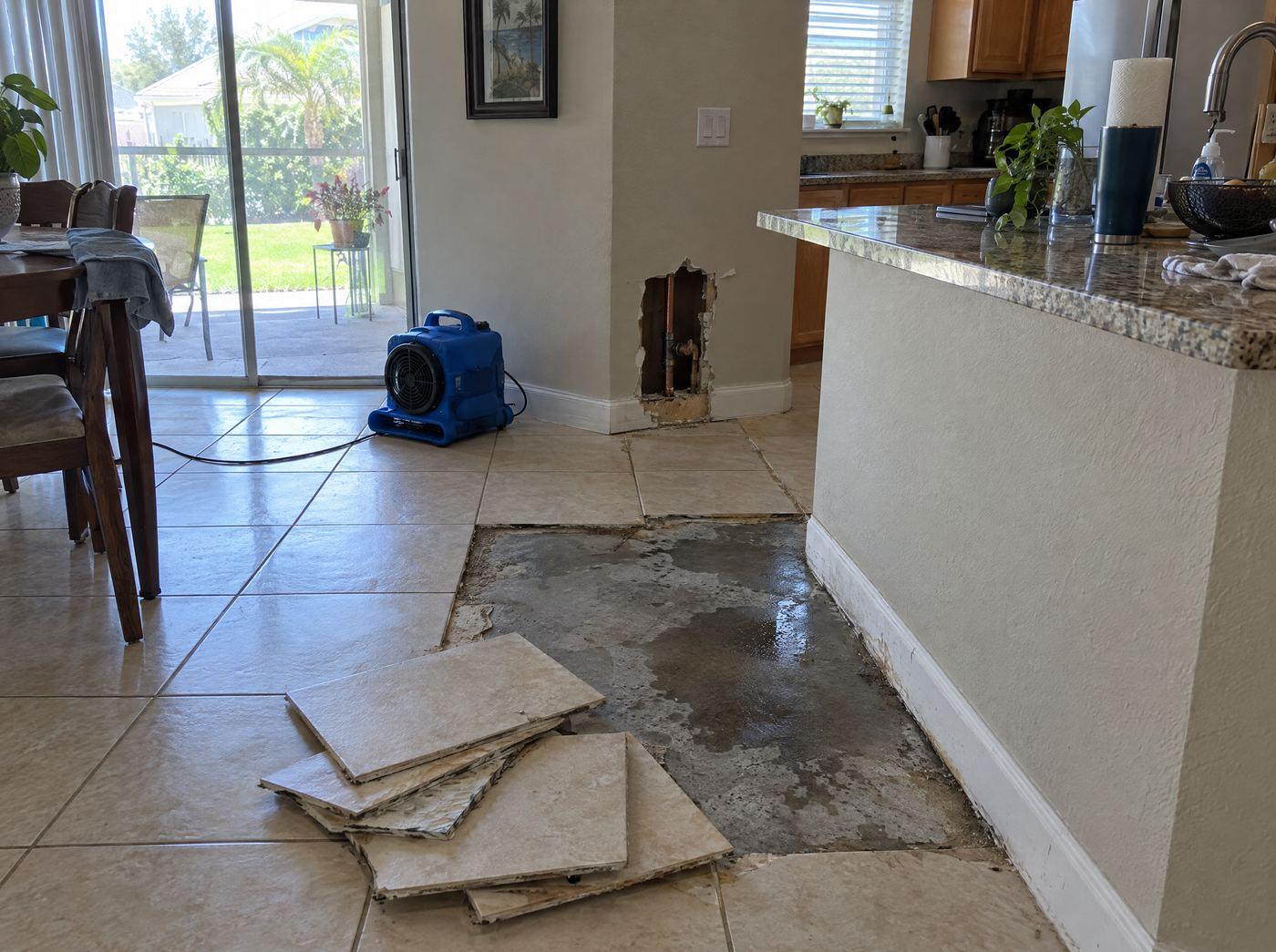
Most Orlando houses sit on a concrete slab, so the water lines run under the floor or up through the walls. When one of those lines fails, the first sign is often a warm spot on the tile, a hissing sound with every faucet off, a water bill that jumps, or baseboards that turn soft. A pipe that splits inside a wall or ceiling is louder: water runs at line pressure until someone closes a valve.
Supply water starts out clean, which helps. If drying starts within a day or two, drywall and cabinets often dry in place. The hard part on a slab home is the floor. Tile, wood and laminate trap water against the concrete, and a slab holds moisture for a long time. That is why a plumber fixes the pipe and a restoration company measures and dries what the water reached.
Water category:Category 1 (clean water) when found early
1Close the main shutoff. On many Orlando homes it sits outside near the meter or where the line enters the house, often by the garage or a hose bib.
2Open a ground-floor faucet to drain pressure off the lines.
3If water is near outlets or a ceiling is sagging, stay out of that room. Switch off its breaker only if you can reach the panel from a dry floor.
4Photograph the wet floor, walls and anything damaged before you move it.
5Call a licensed plumber to find and fix the leak, and get drying started the same day if you can.
How slab leaks & burst pipes cleanup usually works in Orlando
Step 1
Map the moisture
Moisture meters and a thermal camera trace how far the water spread under flooring and inside walls. It is almost always wider than the stain you can see.
Step 2
Coordinate with the plumber
Slab leaks are usually found with electronic leak detection and repaired by a plumber, either through the slab or by rerouting the line overhead. Drying waits for the leak to stop, not for every repair to finish.
Step 3
Remove what traps water
Wet baseboards, soaked carpet pad and sometimes a few rows of tile or laminate come up so air can reach the slab and the bottom of the walls.
Step 4
Dry the slab and walls
Dehumidifiers and air movers run with daily readings until the slab, framing and drywall reach normal levels. Concrete is slow, so slab jobs can run longer than other leaks.
Step 5
Records you keep
Photos and daily moisture logs show what was wet and when it was dry. Ask for copies. They belong to you.
Local notes
What Orlando homeowners should know
Past the meter, the pipes are the owner's responsibility, according to OUC. If you are an OUC customer and water is coming up at the street or the meter itself, call OUC at (407) 423-9018 any time. If it is inside the house or under the slab, close your main and call a licensed plumber, then get drying started.
Insurance
Will insurance cover it?
Water from a sudden plumbing failure is usually treated as a covered loss on a standard Florida HO-3 policy, after your deductible. The pipe repair itself usually is not covered. Some policies treat the cost of breaking out floor or wall to reach the leak differently, so check that wording. Damage from a slow leak that went on for weeks is commonly excluded. Read the water damage section of your own policy, and ask your agent if anything is unclear.
No honest company can price this over the phone. These are the things the crew measures on site. Read the full cost guide.
How long the leak ran before anyone noticed
Square footage of wet flooring and how many rooms it reached
Flooring type: tile, wood and laminate dry differently
Whether walls, cabinets or baseboards have to be opened
Number of drying days for the slab
Talk to a local restoration company
One call connects you with an independent company that serves your part of Orlando. Ask for its Florida license number, get a written estimate, and you decide whether to go ahead.
How do I know if I have a slab leak in my Orlando house?
Common signs are a warm or damp spot on the floor, the sound of running water with every fixture off, a water meter that keeps moving, a bill that jumps for no reason, mildew smell, or flooring that lifts or cracks. A plumber with leak detection equipment can confirm it.
Who do I call first, a plumber or a restoration company?
Shut off the water yourself first. Then you need both: the plumber finds and repairs the line, and the restoration company dries the house. Drying is the time-sensitive part, so it can start while the repair is being scheduled.
Can tile floors be saved after a slab leak?
Often, yes. Tile itself does not absorb much water, but the grout and the slab under it do. Sometimes only a few tiles come up to give air a path. Wood and laminate floors are more likely to cup and need replacing if they stayed wet for days.