Does Homeowners Insurance Cover Water Damage in Florida?
By Central Florida Dry Call · Reviewed
Short answer
Often yes for sudden water from inside the house, like a slab leak, a split pipe or an AC drain overflow. It depends for hurricane rain: usually only if wind first opened the roof or a window. Never for rising water from outside, which needs a separate flood policy. Florida also sets claim deadlines, and you cannot sign your claim over to a contractor on newer policies.
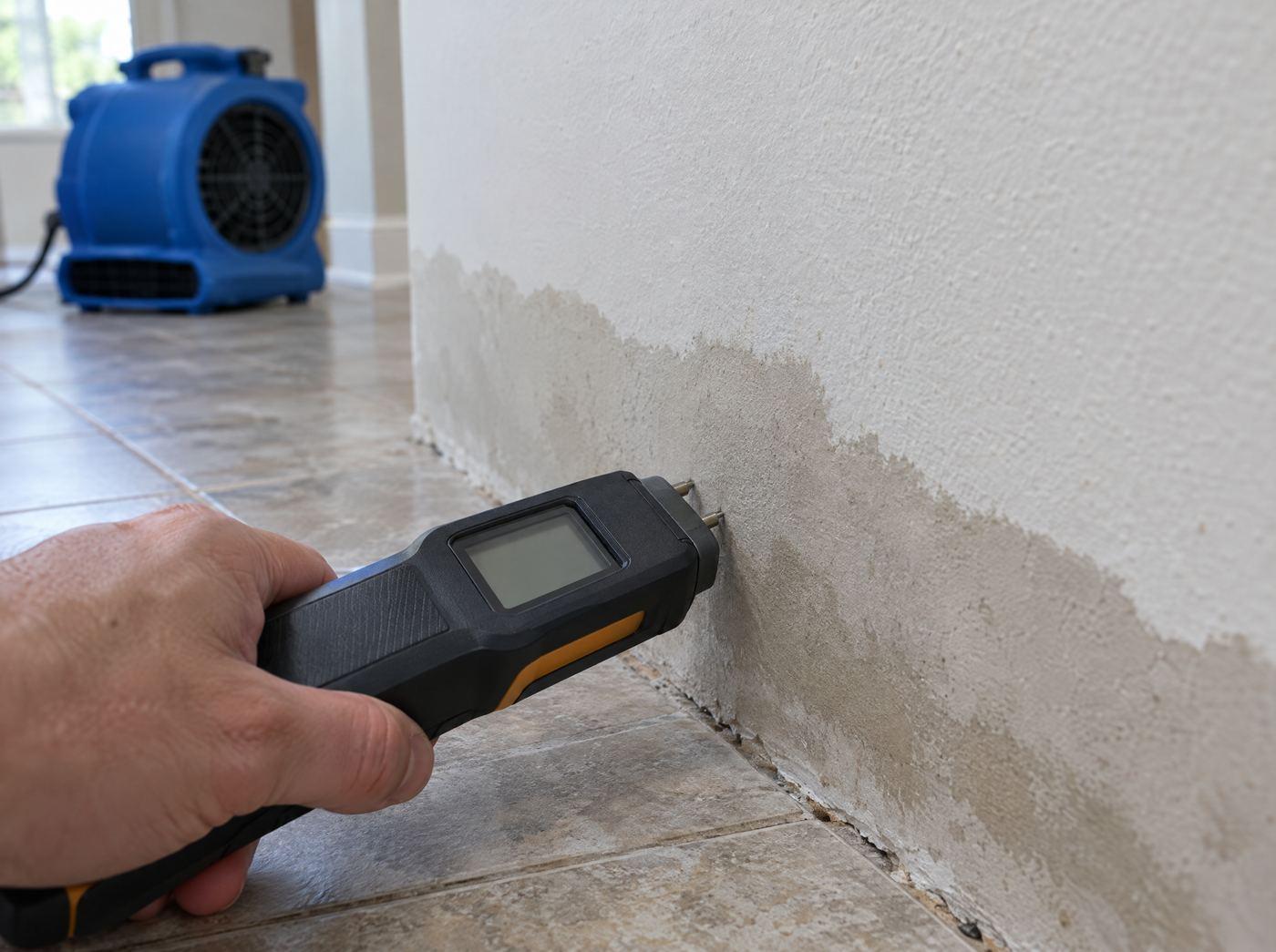
This guide explains how Florida homeowners policies commonly treat the kinds of water damage Orlando homes see, and what Florida law says about the claim process. It is general information, not advice about your policy. Your own policy wording, your agent and your insurer decide coverage. We do not handle, negotiate, or advise on claims, and whether you file one is your decision.
Often covered: sudden water from inside the house
A standard HO-3 policy covers sudden and accidental discharge of water from plumbing, heating and air conditioning, and household appliances. Common examples in Orlando:
- A slab leak or split supply line
- An AC drain line overflow, water heater, washer hose or fridge line that fails suddenly
- Drying, and opening walls or floors needed to dry the house
- Living costs if the home cannot be lived in, under many policies
The failed pipe, drain line or appliance itself is usually not covered, and leaks that went on for weeks are commonly excluded as repeated seepage.
Depends how it got in: hurricane and storm rain
Rain that came in because wind first damaged the roof, a window or a wall is often covered. Rain that seeped through an aging roof with no storm damage often is not. Hurricane losses usually carry a separate hurricane deductible. Florida law requires insurers to offer hurricane deductible options of $500, 2%, 5% and 10% of the dwelling limit, and that deductible applies once per calendar year. See hurricane and storm water damage for what drying involves. Roof repairs are for a licensed roofing contractor.
Often needs added coverage: sewer and drain backups
Water that backs up through a drain is often excluded from a base policy unless you bought water backup coverage, which usually has its own limit. Check your declarations page. See sewage backup cleanup.
Needs flood insurance: rising water from outside
Overflowing ponds, creeks and flooded streets are excluded from standard homeowners policies. That water is covered only by a National Flood Insurance Program policy or a private flood policy. NFIP building coverage goes up to $250,000 and contents up to $100,000, and new policies generally take effect after 30 days. Citizens Property Insurance Corporation requires flood coverage on most of its personal residential policies with wind coverage, phased in through January 1, 2027. Check your flood zone at the FEMA Flood Map Service Center or the City of Orlando floodplain information.
Florida rules every policyholder should know
- You generally have 1 year from the date of loss to give notice of a new or reopened property claim, and 18 months for a supplemental claim. (Fla. Stat. 627.70132)
- Your insurer must acknowledge your claim within 7 days, inspect within 30 days of your proof of loss, and pay or deny within 60 days, unless factors beyond its control prevent it. (Fla. Stat. 627.70131)
- Within 14 days of your first claim contact, your insurer must send you the Homeowner Claims Bill of Rights, which explains state mediation of disputed claims through the Department of Financial Services. (Fla. Stat. 627.7142)
- On policies issued on or after January 1, 2023, you cannot assign your post-loss insurance benefits to a contractor. You stay in charge of your claim. (Fla. Stat. 627.7152)
- Insurers must offer hurricane deductible options of $500, 2%, 5% and 10% of the dwelling limit, and the hurricane deductible applies once per calendar year. (Fla. Stat. 627.701)
- Only a licensed public adjuster or an attorney may negotiate a claim on your behalf for a fee. Restoration companies may document damage and explain their own estimate. (Fla. Stat. 626.854)
- Citizens Property Insurance Corporation requires flood coverage on most new and renewing personal residential policies with wind coverage, phased in through January 1, 2027. (Citizens: flood requirements)
If you decide to report a loss
- Stop the water: close the main shutoff, and switch off power to wet rooms only if it is safe.
- Photograph every wet room from all four corners, plus close-ups of the source and damaged items.
- Take reasonable steps to prevent more damage, such as drying. Policies generally expect it.
- Contact your insurer or agent, report the loss, and write down the claim number and date.
- Keep receipts for anything you spend, including hotel stays and emergency supplies.
- Keep copies of photos, moisture readings and estimates for your own records.
Before you hire anyone, check the company's Florida license on the Florida DBPR license search and read the contract, especially any terms about payment from insurance proceeds. Want a quick read on your situation? The water damage estimator shows the water category and typical equipment in about a minute, and the cost guide explains what sets the price.
General information, not insurance or legal advice. Policies differ; read yours and talk to your agent. Questions about an insurer? Contact the Florida Department of Financial Services consumer help.
Common questions
How long do I have to report water damage in Florida?
Florida law generally bars a property claim unless notice is given within 1 year of the date of loss. A supplemental claim has 18 months (Fla. Stat. 627.70132). Your policy may also require prompt notice, so report a loss as soon as you reasonably can.
Can I sign my claim over to the restoration company?
Not on a policy issued on or after January 1, 2023. Florida law says an assignment of post-loss benefits on those policies has no effect (Fla. Stat. 627.7152). You deal with your insurer directly, and the company bills you under its own contract.
Does homeowners insurance cover mold in Florida?
Many policies limit mold coverage to a set amount or exclude it unless it came from a covered water loss. Drying the water quickly and documenting it keeps the focus on the water damage itself.
What if my insurer and I disagree about the claim?
The Homeowner Claims Bill of Rights your insurer sends explains that you can request mediation of a disputed residential claim through the Florida Department of Financial Services, under most circumstances. You can also contact the department's consumer helpline.
I own a condo. Is the association or my policy responsible?
It depends on the association's master policy and your HO-6 policy. The master policy often covers the building structure and common areas, while your HO-6 covers your unit's interior and belongings. Read both before you call either insurer.